
Modern Facade Design Trends 2026
Introduction
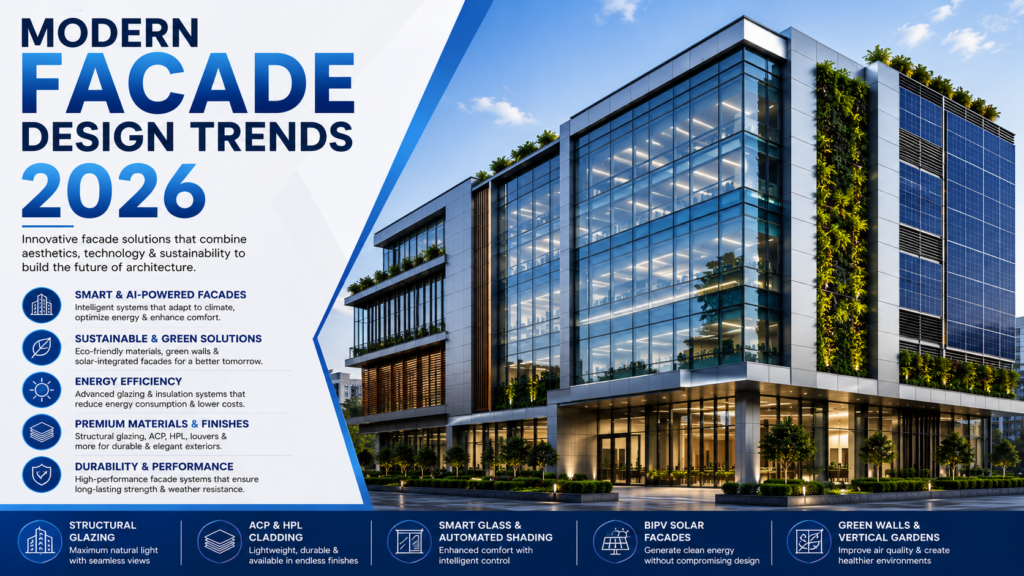
The exterior of a building is much more than just its appearance—it reflects the quality, purpose, and innovation behind the structure. In today’s construction industry, façade design has become an essential part of modern architecture, combining aesthetics with functionality. Buildings are now expected to be visually appealing, energy-efficient, durable, and environmentally responsible.
The Modern Facade Design Trends 2026 focus on creating smarter, more sustainable, and high-performance building exteriors. Whether it’s a commercial office, shopping mall, hotel, hospital, educational institution, or residential project, the right façade system enhances visual appeal, improves thermal performance, reduces energy consumption, and increases the overall lifespan of the building.
In this blog, we’ll explore the latest façade design trends, innovative materials, and practical tips to help you choose the right façade system for your next project.
What is Modern Facade Design?
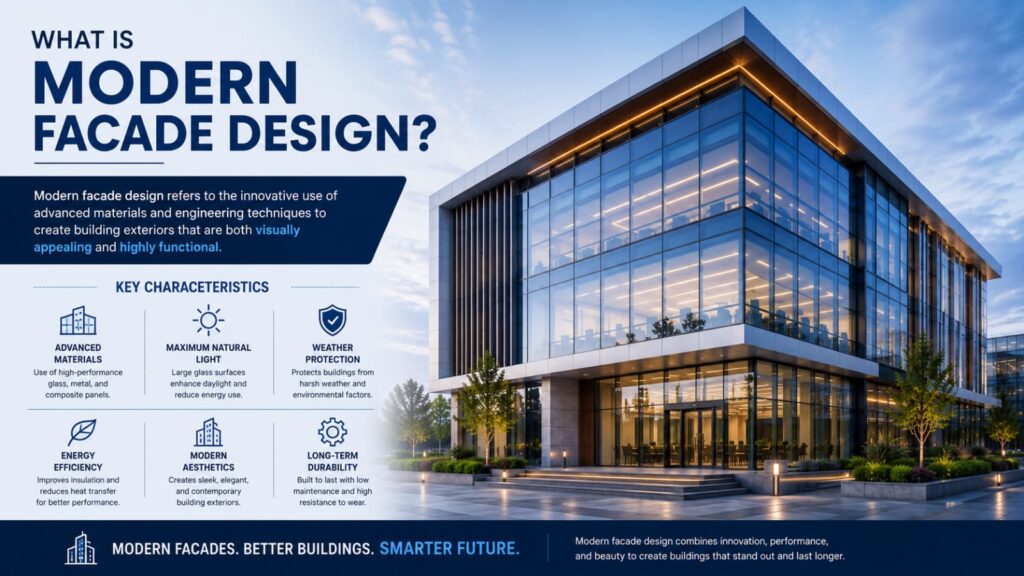
Modern façade design refers to the exterior envelope of a building created using advanced materials, innovative engineering, and contemporary architectural principles. Unlike traditional building exteriors, modern façades are designed to improve energy efficiency, maximise natural daylight, provide weather protection, reduce maintenance, and create a premium architectural appearance.
Today, architects use materials such as Structural Glass, Aluminium Composite Panels (ACP), High-Pressure Laminate (HPL), aluminium louvers, insulated glass, and smart façade technologies to create building exteriors that are both stylish and highly functional.
Why Modern Facade Design Matters
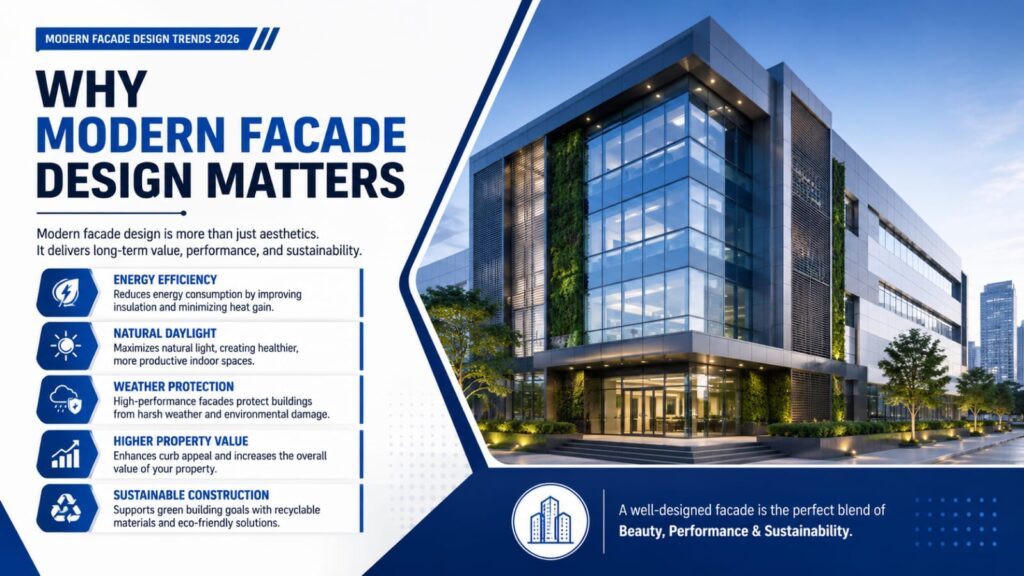
A professionally designed façade delivers much more than an attractive appearance. It directly contributes to a building’s performance, comfort, and long-term value.
Key Benefits
- Creates a strong first impression.
- Improves energy efficiency by reducing heat transfer.
- Enhances natural lighting and indoor comfort.
- Protects the building from harsh weather conditions.
- Increases property value and reduces maintenance costs.
- Supports sustainable and eco-friendly construction.
A high-quality façade is a long-term investment that combines architectural beauty with superior performance.
Top Modern Facade Design Trends 2026
1. Structural Glazing Systems
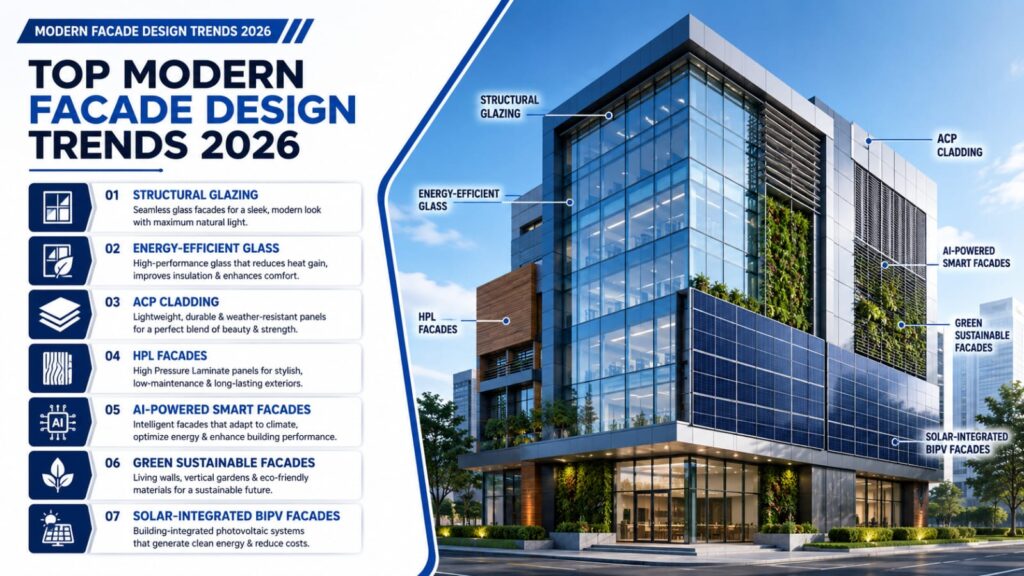
Structural glazing continues to dominate modern commercial architecture. Large frameless glass panels create a seamless, elegant appearance while allowing maximum natural daylight to enter the building. This system is widely used in corporate offices, shopping malls, airports, hotels, and commercial towers because it offers both premium aesthetics and excellent performance.
2. Energy-Efficient Glass Facades
Energy-efficient glazing systems such as Low-E Glass, Insulated Glazing Units (IGUs), and Solar Control Glass help regulate indoor temperatures by reducing heat gain and improving insulation. These systems lower electricity consumption, reduce cooling costs, and create a more comfortable indoor environment.
3. ACP Cladding
Aluminium Composite Panels (ACP) remain one of the most preferred façade materials due to their lightweight construction, weather resistance, durability, and design flexibility. Available in a wide range of colours, textures, and finishes, ACP is ideal for commercial buildings, hospitals, hotels, educational institutions, and residential projects.
4. HPL Facades
High-Pressure Laminate (HPL) façades continue to gain popularity because they combine the natural beauty of wood with exceptional durability. They offer excellent resistance to moisture, UV rays, scratches, and weather, making them suitable for premium residential and commercial developments.
5. Smart & AI-Powered Facade Technologies
One of the biggest Modern Facade Design Trends 2026 is the integration of Artificial Intelligence and smart building technologies. AI-powered façade systems, automated shading devices, smart glass, and IoT sensors automatically adjust according to weather conditions and sunlight. These intelligent systems improve occupant comfort, optimise energy consumption, and significantly reduce operational costs.
6. Green & Sustainable Facades
Sustainability remains a major focus in modern architecture. Green walls, vertical gardens, recyclable materials, and environmentally friendly façade systems help improve air quality, reduce the urban heat effect, and support green building certifications. These solutions create healthier and more sustainable buildings.
7. Solar-Integrated Facades (BIPV)
Building-Integrated Photovoltaics (BIPV) is one of the fastest-growing innovations in façade design. Instead of installing traditional rooftop solar panels, BIPV integrates solar technology directly into the building façade. This allows buildings to generate clean electricity while maintaining a sleek and modern architectural appearance.
Latest Materials Used in Modern Facades
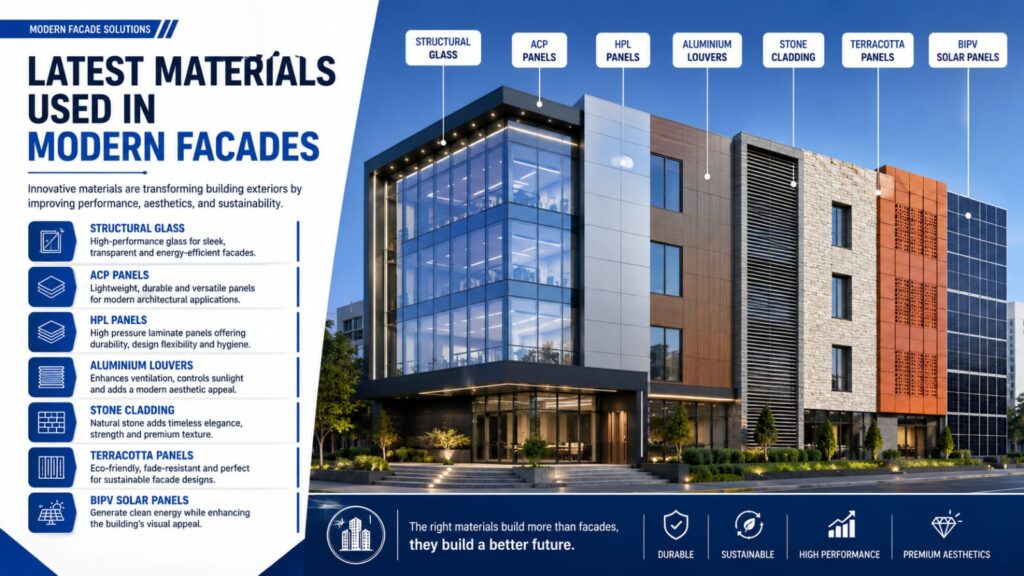
Choosing the right material is essential for creating a durable, efficient, and visually appealing façade. Some of the most popular materials used in modern façade systems include:
- Structural Glass
- Aluminium Composite Panels (ACP)
- High-Pressure Laminate (HPL)
- Aluminium Louvers
- Stone Cladding
- Terracotta Panels
- Building-Integrated Photovoltaics (BIPV)
- Ultra-High Performance Glass
Each material offers unique advantages depending on the building type, climate, budget, and architectural requirements.
How to Choose the Right Facade Design
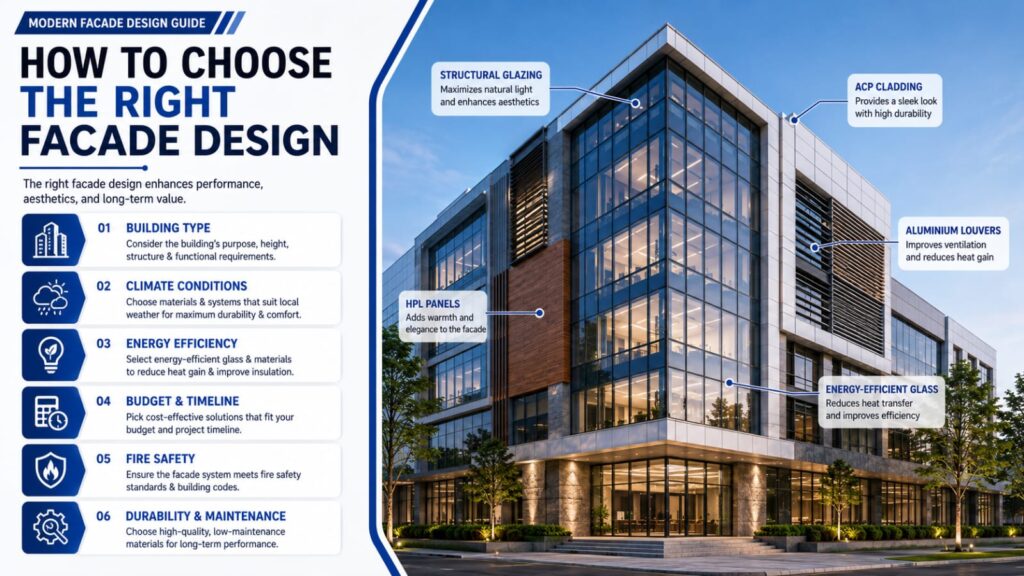
Before selecting a façade system, consider the following factors:
- Type and purpose of the building
- Local climate and weather conditions
- Energy-efficiency requirements
- Budget and project timeline
- Material durability and maintenance
- Fire safety standards
- Overall architectural style
Consulting an experienced façade contractor ensures your building receives a façade system that balances aesthetics, performance, and long-term reliability.
Common Mistakes to Avoid
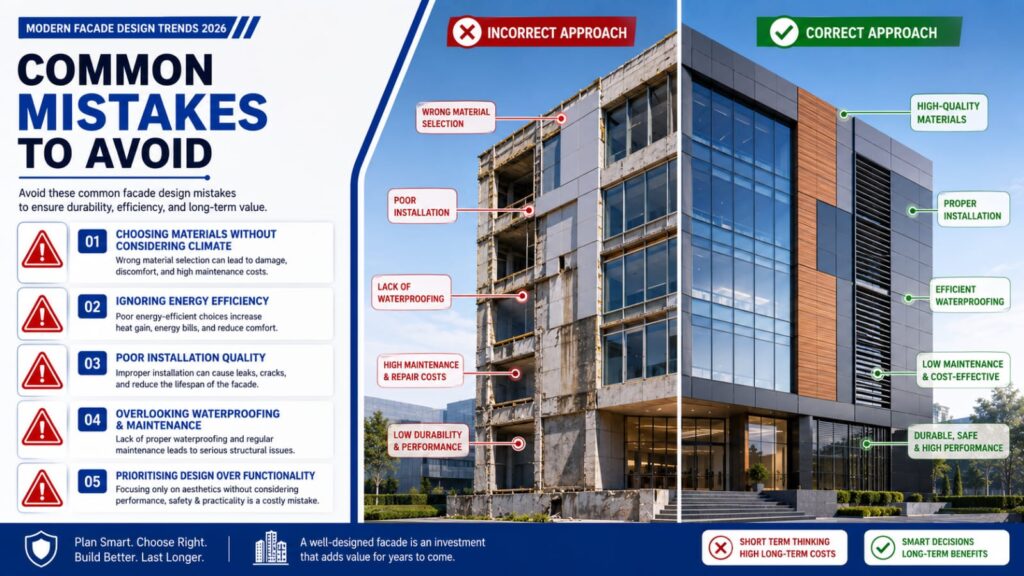
Many building owners focus only on appearance while selecting a façade. To achieve long-term performance, avoid these common mistakes:
- Choosing materials without considering climate.
- Ignoring energy efficiency.
- Using low-quality installation methods.
- Overlooking waterproofing and maintenance.
- Prioritising design over functionality.
A successful façade should combine beauty, durability, sustainability, and performance.
Conclusion
The Modern Facade Design Trends 2026 showcase how architecture is evolving towards smarter, more sustainable, and technology-driven buildings. From structural glazing and energy-efficient glass to AI-powered façade systems, BIPV solar façades, ACP cladding, and HPL panels, modern façade solutions are transforming the way buildings are designed and operated.
Choosing the right façade is no longer just about aesthetics—it’s about improving energy efficiency, enhancing occupant comfort, reducing maintenance costs, and ensuring long-term sustainability. By adopting the latest façade technologies and working with experienced façade professionals, you can create buildings that are future-ready, visually impressive, and built to perform for decades.